

Why Expression Lines Become More Noticeable With Age
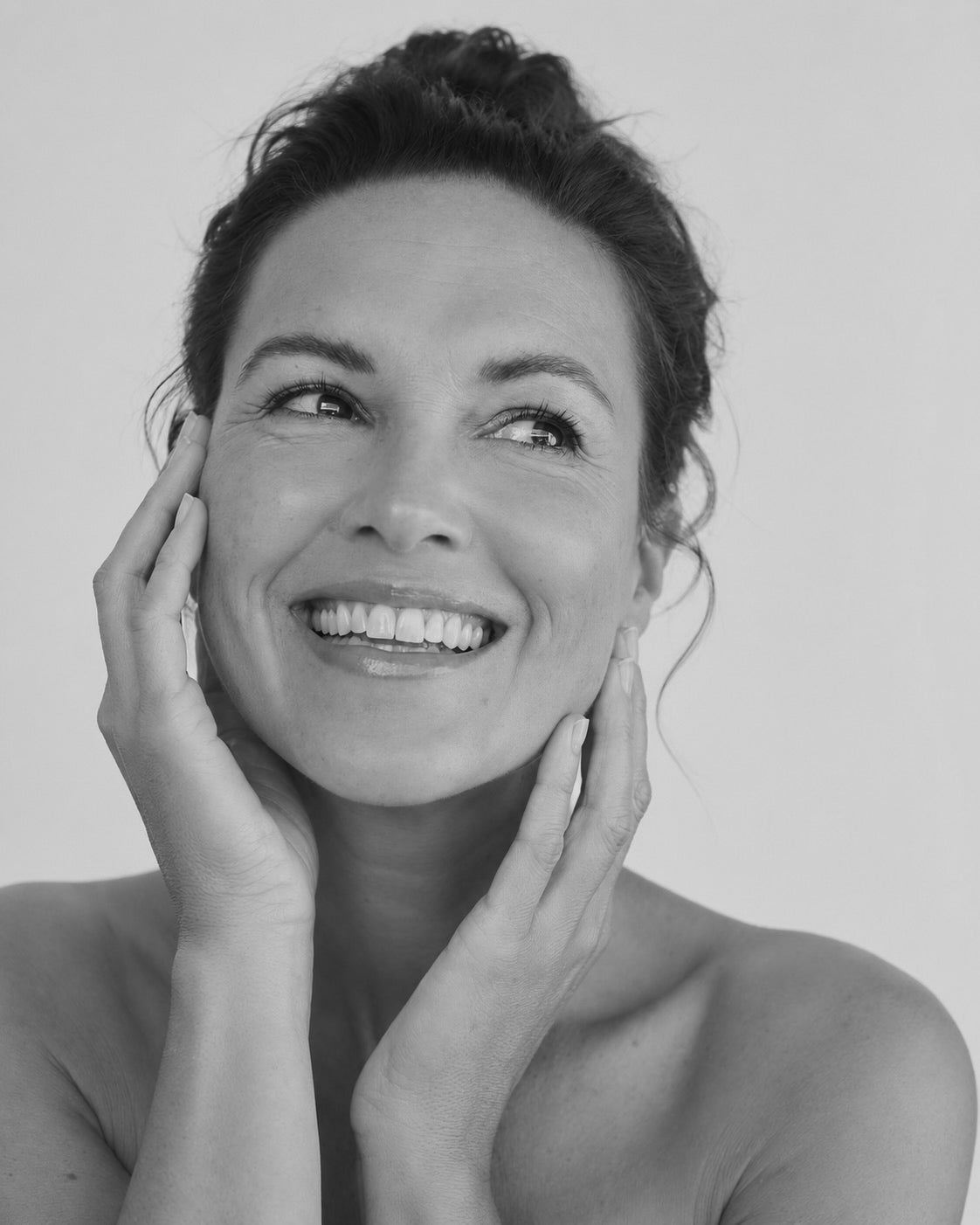
You have been smiling, frowning, and raising your eyebrows for your entire life, so why do the lines created by those expressions suddenly seem more noticeable now?
For years, you may have only seen faint creases around your eyes when you smiled or lines across your forehead when you raised your eyebrows. Once your face relaxed, they disappeared with the expression. Then those same lines started taking a little longer to fade. Eventually, you may have noticed them even when your face was completely at rest.
These are expression lines, and while they are a natural part of how the face moves, their appearance is influenced by much more than how often you smile or frown. The real change is happening within the skin itself. As the skin gradually loses some of the firmness, elasticity, and resilience it once had, it becomes less efficient at recovering from movements it has been making for decades.
Understanding that distinction can completely change the way you approach them.
Your Expressions Are Not Suddenly Creating More Wrinkles
Every facial expression requires movement beneath the skin. When you smile, the skin around your eyes folds. When you raise your eyebrows, the forehead creases. When you concentrate or frown, the area between the brows contracts. These movements happen countless times without us ever thinking about them, often folding the skin in nearly identical places each time.
When skin is younger, it is generally much better at returning to its original position afterward. Collagen provides structural support, while elastin gives the skin the flexibility to stretch and rebound. You can smile, the skin creases, and once the expression disappears, so does most of the evidence that it happened.
The expression itself does not necessarily become more damaging as you get older. Instead, the skin responding to that expression changes. As collagen and elastin gradually decline and years of environmental exposure begin to affect the skin’s resilience, it can take longer for those temporary creases to disappear. What once existed only while the face was moving can eventually remain visible while it is resting. This is why expression lines tend to become more noticeable around the forehead, between the brows, around the mouth, and especially around the eyes. These are not random areas of the face. They are places the skin has been repeatedly folding for years.
Eventually, A Temporary Crease Can Become A Persistent Line
There is an important difference between a line that appears when you make an expression and one that remains afterward. Early expression lines are often most noticeable during movement. As the skin becomes less resilient, however, those lines can gradually become more established.
Collagen loss is part of that transition, but it is not happening alone. Slower cellular renewal, accumulated sun exposure, oxidative stress, dehydration, and changes in the skin barrier can all influence how smooth, firm, and resilient the complexion appears. A line that began because of movement can therefore become more noticeable because the skin surrounding it is changing too.
This is also why simply adding more moisture may temporarily make fine lines appear softer without fully addressing what is contributing to them. Hydrated skin generally looks plumper, but expression lines are not exclusively a hydration concern. In the same way, exfoliating the surface may improve texture without specifically addressing the repeated movement responsible for where those lines developed. Expression lines are the result of several processes overlapping, which is why the most effective approach tends to be one that considers more than one of them.
Some Skincare Is Designed Specifically With Facial Movement In Mind
This is where targeted skincare becomes particularly interesting. While many anti-aging products focus broadly on hydration, firmness, or texture, certain formulas are designed specifically to soften the appearance of lines associated with repetitive facial movement.
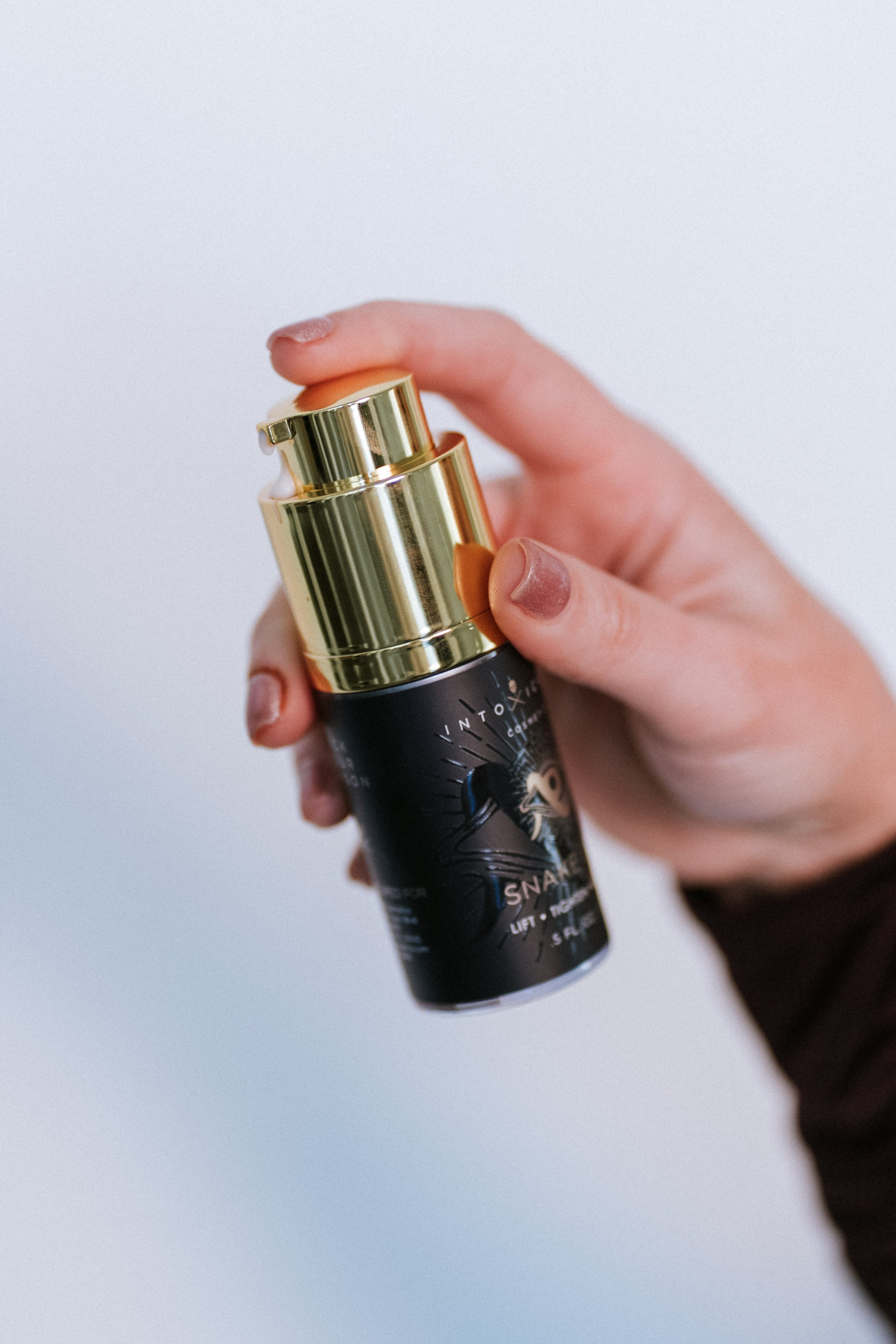
Snake Serum was created with expression lines in mind. Its venom-inspired peptide technology helps the skin appear more relaxed, visibly softening mimic wrinkles around areas such as the forehead, eyes, and mouth. At the same time, the formula supports hydration, firmness, and antioxidant protection, helping address the condition of the skin surrounding those lines rather than focusing on one concern alone.
This does not mean preventing the face from moving. Your expressions are not something that needs to be corrected. Instead, the objective is to help reduce how prominently years of repeated movement begin showing on the complexion while continuing to support the firmness and resilience of the skin itself. For someone beginning to notice that forehead lines remain after the eyebrows relax or that creases around the mouth have become more visible at rest, this type of targeted approach can make more sense than treating every wrinkle exactly the same way.
The Eye Area Usually Shows It First
There is a reason crow’s feet are often among the first expression lines people notice. The skin surrounding the eyes is delicate, yet it is involved in an extraordinary amount of movement. We blink throughout the day, squint in sunlight, smile, laugh, and constantly engage the muscles around the eyes without realizing it.
Over time, those repeated movements meet skin that is gradually becoming thinner, less firm, and less able to rebound as quickly. The result can be fine lines that begin at the outer corners of the eyes and become increasingly visible even when you are no longer smiling.
The eye area also has its own set of concerns. Puffiness, dark circles, loss of firmness, and visible sun damage can make the entire area appear more tired or aged, even when wrinkles are only part of what you are noticing. Snake Eyes Eye Serum was designed to take the broader approach, helping soften the appearance of crow’s feet and fine lines while also addressing firmness, puffiness, dark circles, and hydration. Treating the eye area separately is not about adding another step simply for the sake of having one. It is recognizing that some of the most delicate skin on the face is also some of the hardest-working.
What Your Skin Does Between Expressions Matters Just As Much
Addressing expression lines is not only about what happens while your face is moving. The skin also needs to continually renew itself, maintain its structural support, and recover from the environmental stress it encounters every day. Cellular renewal naturally becomes less efficient with age, while collagen production declines and accumulated damage can become more visible. These changes can affect texture, firmness, and depth of fine lines, making the complexion less able to bounce back from repeated movement than it once was.
This is where Sea Venom Retinal takes a different approach. Rather than specifically targeting facial movement, it supports the skin’s renewal process while helping improve the appearance of fine lines, wrinkles, firmness, texture, and uneven tone. Its time-released retinaldehyde system was designed to provide advanced skin renewal while helping minimize the irritation that can make a stronger retinoid routine difficult to maintain.
Used consistently, renewal-focused skincare can help support the overall quality and resilience of the skin. That becomes increasingly important with expression lines because the better supported the skin is between movements, the better equipped it is to maintain the smoothness and firmness that gradually become harder to preserve with age.
You Do Not Need To Stop Smiling To Take Expression Lines Seriously
There is no realistic skincare routine that prevents your face from moving, nor should there be. Expression lines are evidence of something your skin has been doing your entire life. What changes with age is not the fact that you smile, laugh, squint, or frown. It is how efficiently the skin responds afterward.
This is why expression lines deserve a slightly different approach from simply treating “wrinkles” as one universal concern. Targeted formulas can help soften the visible effects associated with repeated movement, while eye treatments can address the delicate areas where those movements tend to show first. Supporting cellular renewal and firmness can then help improve the condition of the skin that has to perform those movements every day.
The goal is not to erase expression from the face. It is to support the skin as its ability to recover from those expressions begins to change. Once you understand the difference, expression lines become much less mysterious and much easier to approach with intention.


Kommentare