

Why Your Skincare Routine Shouldn’t Stop At Your Jawline
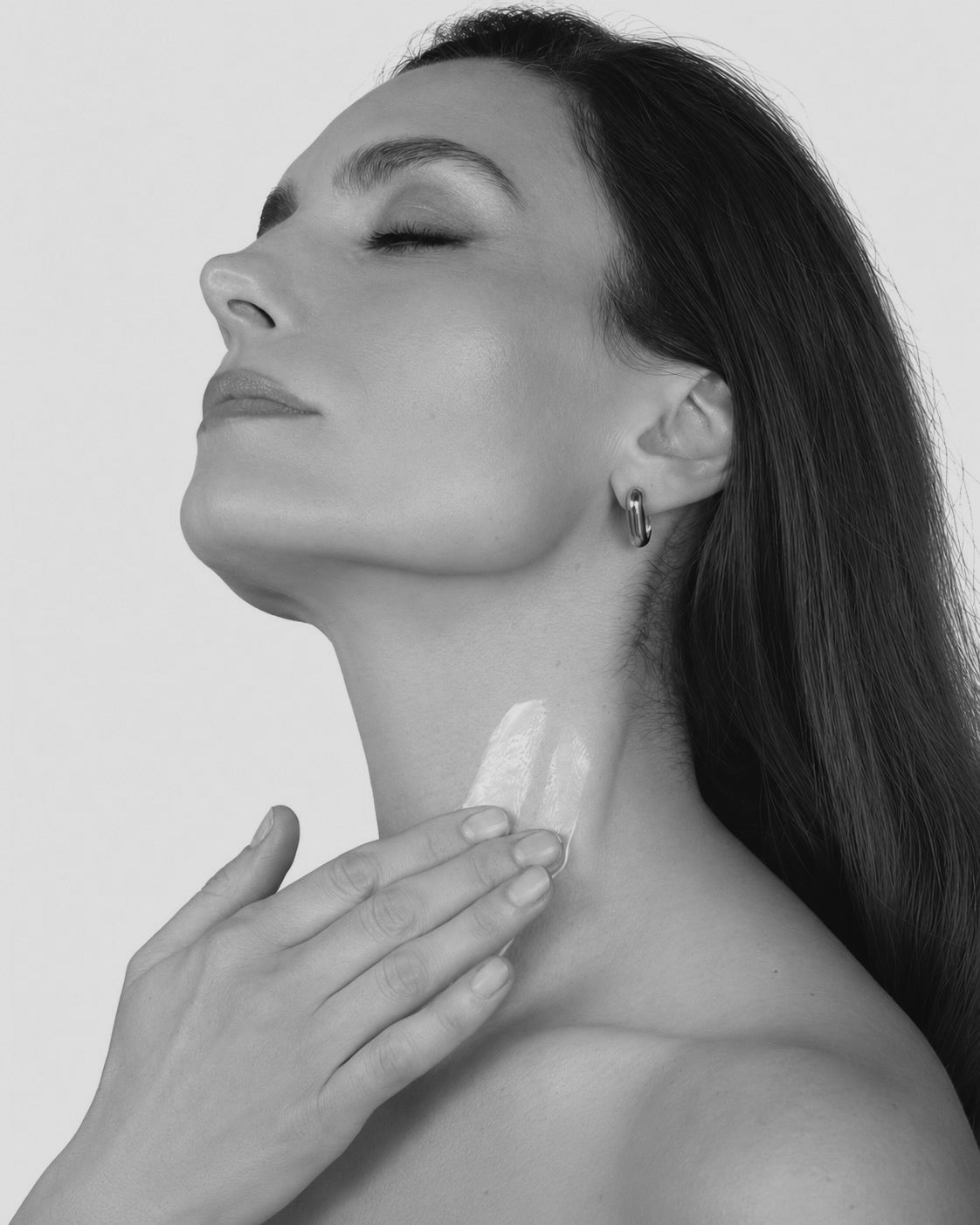
There is a strange invisible boundary in skincare, and it sits somewhere around the jawline. We will carefully press serum into the forehead, make sure moisturizer reaches the edges of the face, and spend years treating every new line, dark spot, and change in texture we notice from the chin upward. Then our hands reach the jaw, and almost automatically, the routine ends.
Meanwhile, the skin directly below it has been there the entire time. Your neck has been turning, bending, stretching, and folding alongside your face. Your chest has spent years exposed to sunlight through open collars, swimsuits, workout clothes, and summer dresses. Both areas experience many of the same changes in collagen, hydration, pigmentation, and resilience that we are so diligent about addressing on the complexion, yet they often receive considerably less attention until those changes become difficult to ignore.
It is why someone can spend years maintaining the appearance of their face only to eventually notice that their neck or décolletage seems to be telling a different story. The solution is not necessarily another collection of products specifically for everything below your chin. Sometimes, the first change is much simpler: stop treating the jawline like the place where skincare has to end.
Your Neck Has Been Aging Right Alongside Your Face
We tend to think of facial aging as though it is happening within a neatly defined area. Forehead lines become more noticeable, pigmentation appears across the cheeks, and the skin around the mouth loses some of its firmness. We respond by adjusting the products we use on the face, even though many of the biological processes behind those changes extend beyond it.
Collagen and elastin gradually decline throughout the skin. Cellular renewal becomes less efficient. Years of ultraviolet exposure contribute to oxidative stress and changes in pigmentation, while the skin barrier continually manages water loss and environmental exposure. None of these processes reach the jawline and simply stop.
The neck and chest do, however, have characteristics that can make visible changes particularly noticeable. The skin of the neck is thinner than that of many areas of the face and contains fewer sebaceous glands, which can contribute to dryness. The décolletage also spends years accumulating environmental exposure, often without receiving the same consistent protection or treatment as the face. This is part of the reason these areas can seem to change suddenly. The change itself was rarely sudden; we simply were not paying as much attention to it.
Think About How Much Your Neck Actually Moves
You probably do not think about your neck every time you look down at your phone, turn toward someone speaking to you, look at a computer, or tilt your head while getting ready in the morning. But the skin notices. The neck is constantly moving, and that movement repeatedly folds the skin in many of the same places.
When the skin is younger and more resilient, those folds tend to disappear easily once the neck changes position. As collagen, elastin, and firmness gradually decline, the skin can become less efficient at rebounding. Horizontal lines that once appeared primarily during movement can begin to remain visible afterward.
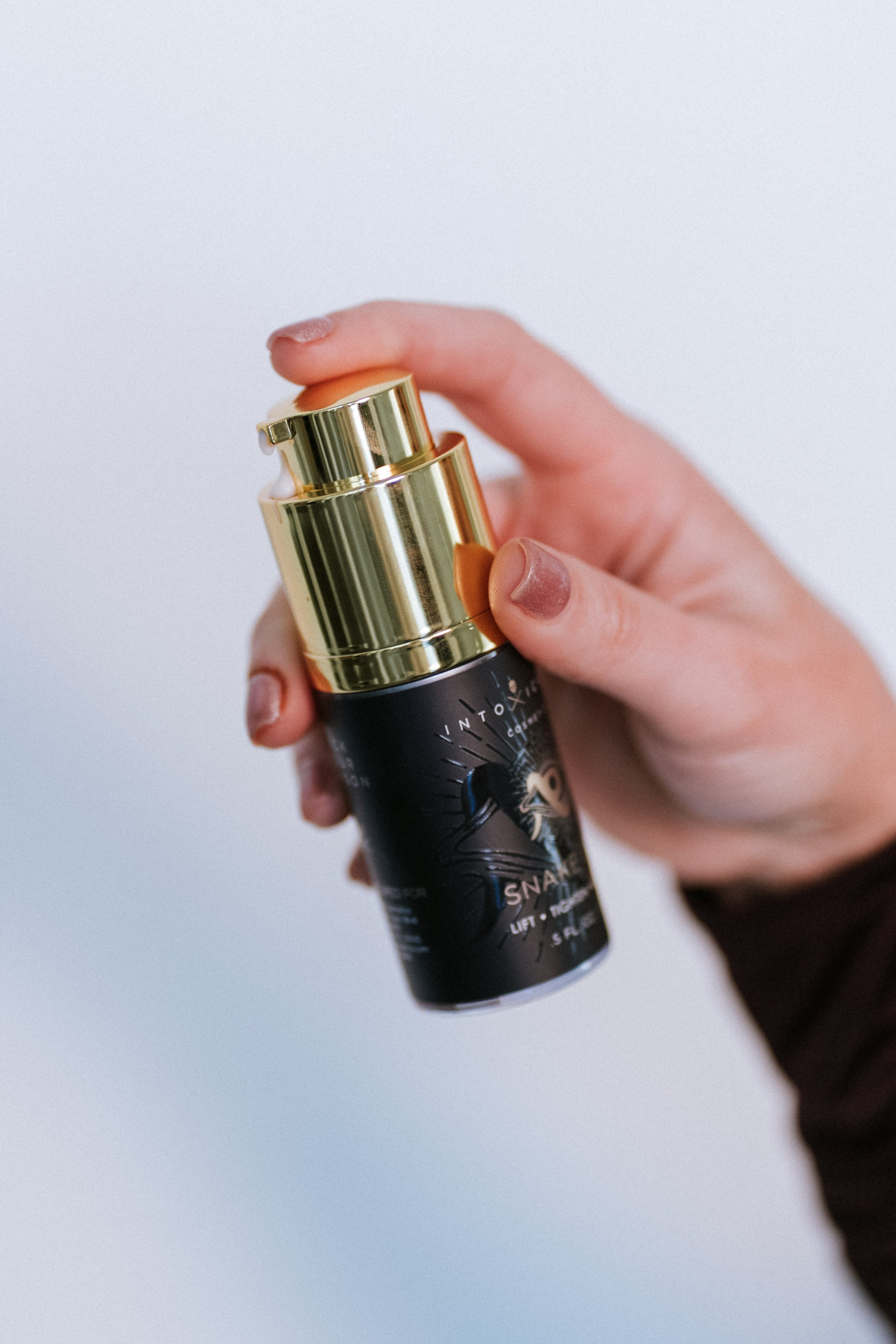
It is not entirely different from what happens with expression lines on the face. The location has changed, but the relationship between repeated movement and declining skin resilience remains. This is where a formula such as Snake Serum becomes particularly relevant beyond the traditional boundaries of the face. SYN-AKE® peptide helps visibly soften lines associated with repeated movement, while the surrounding formula supports hydration, firmness, antioxidant protection, and skin density. If those are concerns you are addressing across your forehead and around your mouth, there is little reason to treat them as irrelevant a few inches lower.
Your Chest May Have Seen More Sun Than You Realize
There are certain places we remember to protect from the sun almost instinctively, and the face is usually one of them. The chest is easier to forget, even though the décolletage is often exposed more frequently than we realize.
A V-neck shirt, an open button-down, a workout tank, a swimsuit, or even the neckline of an everyday top can leave the same area of skin uncovered again and again. A few minutes here and an afternoon there may not seem significant, but ultraviolet damage is cumulative. Eventually, that history can begin to appear as uneven pigmentation, changes in texture, fine lines, and loss of firmness.
It is also why antioxidant protection becomes relevant well beyond the face. E.C.Dysis combines L-Ascorbic Acid with Vitamin E and Ferulic Acid to help protect against free-radical damage while addressing discoloration and supporting collagen. Dragon Serum takes environmental defense even further, using a multi-pathway antioxidant complex to help defend against oxidative stress while supporting the skin barrier and long-term resilience. The objective is not simply to correct the evidence of environmental exposure once it appears, but to remember that exposed skin is accumulating that damage whether or not it happens to be part of what we traditionally call the face.
And, of course, antioxidant skincare does not replace sunscreen. If your neckline leaves your chest exposed, SPF belongs there too.
Sometimes “Crepey” Skin Is Also Thirsty Skin
Changes in firmness are not the only reason the neck and chest can begin looking different. Hydration has an enormous influence on the way texture appears. When the skin is adequately hydrated, its surface tends to look plumper and more supple. As water content decreases, fine lines can become easier to see, and already-thin skin may take on a more creased or crepey appearance.
That distinction matters because it is easy to look at the neck, see texture, and immediately assume every visible change is the result of collagen loss. Some of it may be. Some of it may also become significantly more apparent because the skin is dehydrated.
The irony is that moisturizer is often one of the easiest products to extend below the jawline, yet it is still commonly applied only to the face. Antidote Moisturizer was designed to provide lasting hydration while supporting collagen, elastin, and environmental protection, making the neck and décolletage a natural extension of your routine rather than an entirely separate step. Hydration cannot reverse every structural change occurring within the skin, but it can make an important difference in how smooth, supple, and comfortable that skin appears.
You Don’t Need To Make Up For Lost Time Overnight
There is one important caveat to suddenly remembering that everything below your jaw exists: do not attack it. If your face has spent years gradually becoming accustomed to acids, retinal, and other intensive treatments while your neck and chest have received little more than body lotion, applying the exact same routine at the exact same frequency may not be the smartest introduction.
The skin in these areas can be more reactive, particularly when it comes to stronger exfoliants and retinoids. More treatment does not compensate for years of inconsistent treatment, and irritation will not make the process move faster. Instead, extending your routine should be just that: an extension.
The goal is not to create an entirely separate routine for your neck and chest. Instead, think about extending the products you already use beyond the jawline. Your serums, antioxidants, and moisturizer do not necessarily need to stop at your chin simply because that is where the face ends.
With more intensive treatments, such as exfoliating acids or retinal, it can still be helpful to introduce them gradually if you have never used them on these areas before. The point is not to use different products, but to give the skin time to adjust to the same treatments that may already be familiar to your face.
Your Routine Doesn’t Need To Get Longer. It Just Needs To Go Farther.
The beauty industry has created a product for nearly every square inch of the body, which can make caring for another area of skin sound suspiciously like another reason to buy something. It does not have to be. You are already cleansing, exfoliating, applying targeted treatments and serums, supporting the eye area, adding antioxidant protection, and finishing with moisturizer. You are already thinking about collagen, pigmentation, hydration, expression lines, and environmental damage.
Extending some of the same attention beyond the jawline does not necessarily add another step to your routine. It changes the area you consider part of it. The neck has been moving with you, the chest has been exposed with you, and the skin in both places has been changing with you, whether you have been paying attention to it or not.

Kommentare