

Why Your Skin Produces Less Collagen Over Time

Collagen is often treated as the answer to nearly every visible sign of aging. It appears in skincare claims, supplement advertisements, treatment menus, and conversations about firmness, wrinkles, and elasticity. Yet collagen is not simply something the skin either has or does not have. It is part of a complex support system that changes gradually throughout life. In younger skin, collagen is produced more efficiently and organized within a strong structural network beneath the surface. This framework helps the complexion appear firm, smooth, and resilient while allowing it to recover more easily from facial movement and environmental exposure.
As collagen production begins to slow, the skin does not appear different overnight. The changes are gradual. Fine lines may become more noticeable, expression lines may remain visible after the face relaxes, and areas that once appeared naturally firm may begin to lose some of their density and support. Understanding why this happens makes it easier to approach collagen care realistically. The goal is not to reverse every biological change within the skin, but to create a routine that helps protect the collagen already present while supporting the processes that maintain firmness, renewal, and long-term skin quality.
What Collagen Does for the Skin
Collagen is one of the primary structural proteins found within the skin. It forms a supportive framework that helps maintain firmness, strength, and density beneath the complexion. Alongside elastin and other components of the extracellular matrix, collagen helps the skin resist stretching and recover from movement. It contributes to the smooth appearance of the forehead, the firmness of the cheeks, and the structure surrounding areas that experience frequent facial expression.
When this network is strong, the skin often appears more resilient and refined. Fine lines are less prominent, facial contours appear better supported, and the complexion is more capable of recovering from daily stress.
Collagen also works closely with hydration. Although moisture and collagen are not the same, well-hydrated skin tends to appear fuller and more supple, making fine lines less visible at the surface. This is why effective collagen-focused skincare often includes both structural support and hydration rather than relying on one approach alone.
Why Collagen Production Naturally Slows
The body continuously creates and breaks down collagen. In younger skin, these processes remain relatively balanced. New collagen is produced as older or damaged fibers are removed and replaced. As the skin matures, this balance begins to shift. Collagen-producing cells become less active, renewal slows, and the skin may not replace structural proteins as efficiently as it once did. Existing collagen fibers can also become less organized and more vulnerable to damage.
These changes affect more than the appearance of wrinkles. They can influence firmness, elasticity, texture, and the skin’s ability to recover after inflammation or environmental exposure. Hormonal changes may also affect collagen levels, particularly as estrogen declines. Because estrogen contributes to several processes involved in skin thickness, hydration, and collagen maintenance, these changes can make a reduction in firmness and density more noticeable.
While chronological aging plays an unavoidable role, it is only one part of the equation. The rate at which collagen changes is also influenced by environmental exposure, repeated movement, oxidative stress, and daily skincare habits.
UV Exposure Accelerates Collagen Breakdown
Sun exposure is one of the most significant external factors affecting collagen. Ultraviolet radiation generates free radicals and activates enzymes that break down collagen fibers within the skin. This process can occur long before visible sun damage becomes obvious. With repeated exposure, the skin’s structural framework may gradually become weaker and less organized. Fine lines deepen, texture becomes less refined, and areas of the face may begin to lose firmness more quickly.
This is why collagen support cannot focus only on stimulating renewal. Protecting existing collagen is equally important. Daily sunscreen remains essential, but antioxidant skincare can provide another layer of support by helping neutralize the free radicals created through UV exposure and environmental stress.
E.C.Dysis Vitamin C Serum is particularly relevant in the morning routine because it helps support brightness while reinforcing the skin against oxidative damage. Vitamin C also plays an important role in the processes involved in collagen formation, making it useful for both protection and structural support. Rather than treating Vitamin C as a brightening ingredient, it is better understood as part of a broader strategy for maintaining skin quality during daily exposure.
Oxidative Stress Weakens the Skin’s Support System
UV radiation is not the only source of collagen-damaging stress. Pollution, blue light, inflammation, lack of sleep, and daily environmental exposure can all contribute to the production of free radicals. Free radicals are unstable molecules that can damage cells, proteins, and lipids within the skin. When the body’s antioxidants become overwhelmed, the resulting imbalance is known as oxidative stress.
Over time, oxidative stress can influence the quality of collagen and elastin while contributing to inflammation and slower recovery. The complexion may begin appearing duller, less firm, or more visibly fatigued even before deeper lines become noticeable.
Dragon Serum was developed to address this type of ongoing exposure. Applied as the final serum step, it helps defend against environmental stress while supporting collagen, barrier function, and cellular processes associated with long-term skin resilience. Its role within a collagen-focused routine is primarily protective. By helping manage oxidative stress before it contributes to more visible damage, Dragon Serum supports a complexion that is better equipped to maintain firmness, hydration, and overall skin quality.
Repeated Facial Movement Changes Expression Lines
Not every wrinkle forms in the same way. Some are influenced primarily by collagen loss and environmental exposure, while others begin with repeated facial movement. Smiling, squinting, frowning, and raising the eyebrows continuously fold the skin in the same areas. In younger skin, these lines often disappear when the face relaxes because the collagen and elastin network can recover more efficiently. As structural support decreases, those temporary expression lines may begin to remain visible at rest. Lines across the forehead, around the eyes, and near the mouth often become more pronounced as movement and collagen decline begin working together.
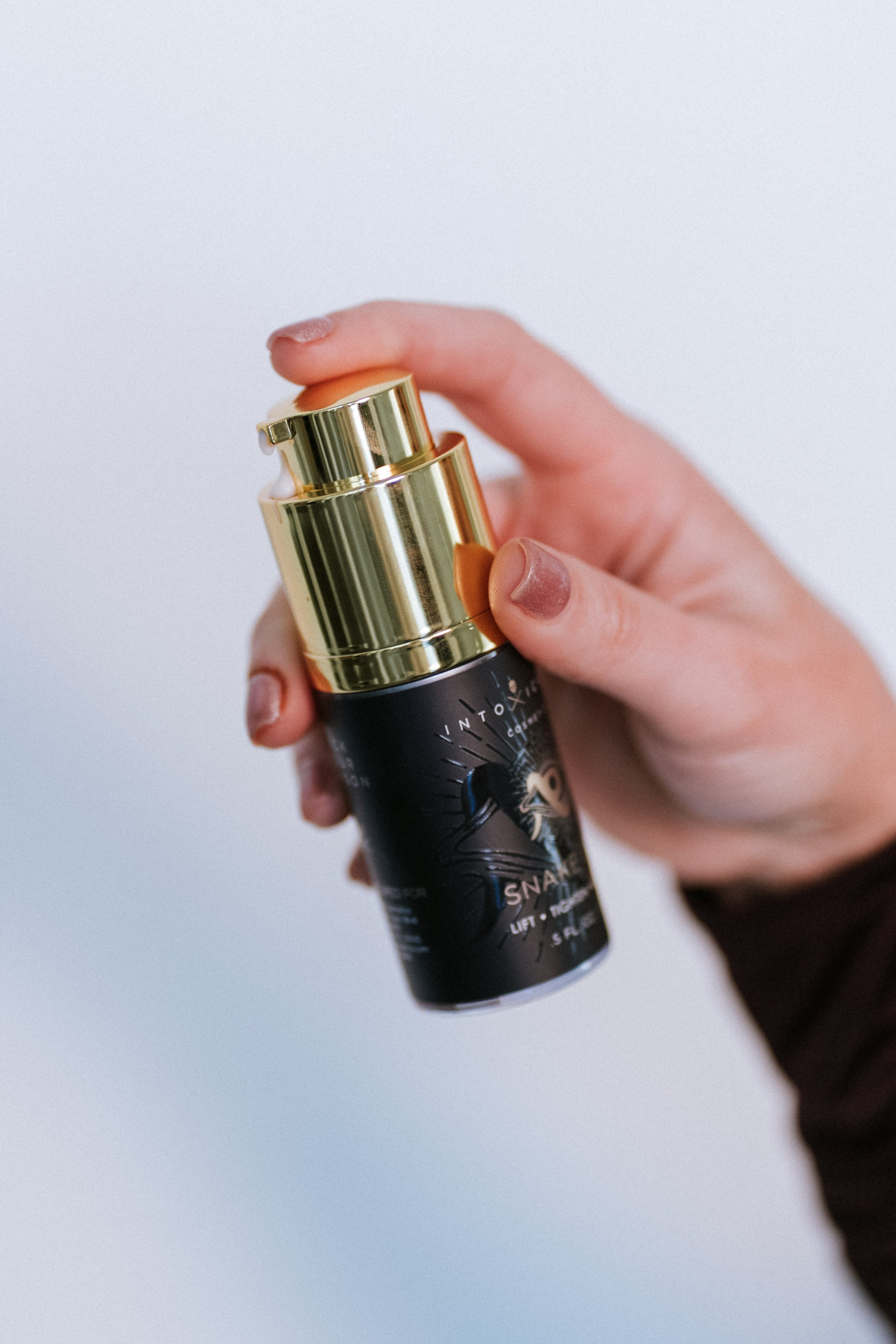
Snake Serum is especially relevant for those areas because it was designed to address the appearance of mimic wrinkles and repeated-expression lines. Rather than approaching every visible line as a surface hydration concern, it focuses on the areas where ongoing facial movement contributes to deeper creasing. This makes it a targeted addition for skin that is beginning to show persistent forehead lines, crow’s feet, or wrinkles around the mouth.
Cellular Renewal Becomes Less Efficient
Collagen quality is closely connected to the skin’s broader renewal process. As cellular turnover slows, damaged cells remain at the surface longer, and the processes involved in rebuilding the skin become less efficient. The result may appear as rough texture, uneven tone, enlarged-looking pores, or a complexion that no longer reflects light as evenly. These changes can make collagen loss appear more noticeable, even when the deeper structural changes are still developing gradually.
Sea Venom Retinal supports this renewal process by encouraging cellular turnover and helping stimulate the mechanisms involved in collagen production. Its time-released retinaldehyde system was designed to deliver advanced renewal while minimizing the irritation commonly associated with more aggressive retinoid routines. Consistent nighttime use can help improve the appearance of fine lines, texture, firmness, and uneven tone while supporting the skin as it renews overnight. Retinal does not replace collagen directly. Instead, it encourages the skin to function more efficiently, helping create the conditions necessary for improved structural support and a more refined complexion.
Inflammation Can Interfere With Healthy Collagen
Inflammation is often discussed in relation to breakouts or sensitivity, but it can also affect the skin’s long-term structural health. When inflammation becomes persistent, it may increase oxidative stress and activate processes that contribute to collagen breakdown. Redness, irritation, environmental exposure, and recurring blemishes can all place additional pressure on a complexion that is already becoming slower to recover. This is one reason aggressive skincare does not always produce better results. A routine that continuously overwhelms the skin may create more visible stress while interfering with the consistency needed to support renewal and collagen maintenance.
Bee Serum approaches collagen support from a more balanced perspective. It was designed to support firmness and renewal while also addressing excess oil, congestion, and the visible inflammation associated with blemish-prone skin. For complexions that experience both early signs of aging and oil-related concerns, this creates a more complete approach. Rather than treating firmness and breakouts as entirely separate issues, Bee Serum helps support the environment in which healthier-looking skin can recover and function more effectively.
Hydration Makes Collagen Loss Less Visible
Dehydration does not directly cause collagen loss, but it can make its effects appear more pronounced. When the skin lacks water, the surface becomes less supple and fine lines may appear deeper. Texture can look rougher, and areas with reduced structural support may become more noticeable.
Maintaining hydration helps the complexion appear fuller and more flexible while supporting the skin barrier. A healthy barrier limits excessive water loss and allows the skin to remain more resilient against environmental stress. Many collagen-focused treatments are most effective when hydration is maintained alongside them. Renewal without moisture support can leave the complexion feeling compromised, while hydration alone may temporarily soften lines without addressing the deeper processes contributing to them. A complete routine brings both together by supporting turnover, firmness, antioxidant defense, and moisture retention at the same time.
Collagen Support Is a Long-Term Strategy
There is no single moment when collagen suddenly disappears, just as there is no single product that restores every structural change within the skin. Collagen care is cumulative. It involves protecting the skin from UV exposure, managing oxidative stress, supporting cellular renewal, maintaining hydration, and addressing the specific concerns created by facial movement, inflammation, or environmental damage. Each product approaches collagen from a different direction because collagen decline is not caused by one factor alone.
Supporting the Skin as It Changes
Skin aging is often described entirely in terms of loss, but that perspective overlooks how responsive the skin remains throughout life. Although collagen production naturally becomes less efficient, the skin can still benefit from consistent protection, renewal, hydration, and targeted treatment. The objective is not to force the complexion to behave as it did years earlier. It is to help it remain resilient, supported, and better equipped to manage the changes that occur over time.
A thoughtful collagen-focused routine protects what the skin already has while supporting the processes that influence firmness, texture, and recovery. The most effective approach is rarely the most aggressive one. It is the routine that consistently protects against daily damage, encourages healthy renewal, and supports the skin’s structure without overwhelming its ability to maintain balance.


Comentarios