

Why Your Skin Doesn’t Bounce Back Like It Used To

There was probably a time when a breakout disappeared almost as quickly as it arrived. A late night barely registered the next morning, a dry patch resolved within a day or two, or a little too much sun did not seem to linger on your complexion for weeks afterward. Then, somewhere along the way, things started sticking around. The blemish disappears, but the dark spot remains. Redness takes longer to settle, dehydration becomes more noticeable, and a few nights of poor sleep suddenly seem to show up across your entire complexion.
It is one of the less talked-about ways our skin changes with age. We hear plenty about collagen loss, fine lines, and wrinkles, but not nearly as much about recovery or why the skin gradually becomes less efficient at bouncing back from the everyday stress it encounters. The answer is not one single biological change. Skin recovery relies on everything from cellular renewal and hydration to inflammation, barrier function, and environmental protection. As those processes begin to change, so does the speed at which your complexion seems to return to normal.
Slower recovery does not mean skin stops responding. It simply means the way we support it becomes increasingly important.
Your Skin Is Constantly Recovering, Even When You Don’t Realize It
Skin rarely gets a day off. While you are going about your routine, your complexion is simultaneously managing ultraviolet exposure, pollution, temperature changes, moisture loss, oil production, bacteria, inflammation, and the products you are applying to it. Beneath the surface, new cells are developing while older ones are being shed. At the same time, the skin barrier is continuously working to maintain the delicate balance between retaining moisture and keeping environmental irritants out.
When these systems are functioning efficiently, much of that work happens without you ever noticing. The skin adjusts, repairs, and restores balance while continuing to perform the countless processes necessary to keep the complexion functioning normally.
As the skin matures, however, cellular renewal naturally becomes less efficient. Years of cumulative environmental exposure can also begin to affect the skin’s ability to maintain the resilience it once had. The result is not always a dramatic change. More often, it is simply the realization that things take longer. A breakout leaves more behind, dryness lingers, and the complexion may need more time to recover after periods of stress.
Why That Breakout Is Still Hanging Around After It’s Gone
Sometimes the blemish itself is not the frustrating part. It is what remains after the breakout has already disappeared. A breakout causes inflammation within the skin, and clearing the blemish does not necessarily mean the complexion has finished recovering from it. Redness and discoloration can remain visible well after the initial inflammation has subsided, particularly when the skin’s renewal process is no longer moving as efficiently as it once did.
This is also why repeatedly attacking a breakout with increasingly aggressive products can be counterproductive. Skin that is already managing inflammation does not necessarily benefit from being stripped, dried out, or overwhelmed with treatments. Bee Serum takes a more comprehensive approach by helping address excess oil and congestion while supporting hydration, firmness, and the visible inflammation associated with skin prone to blemishes. Rather than focusing only on the breakout itself, it helps support the overall skin environment as the complexion works to return to balance.
Recovering from a blemish is not only about making it disappear. It is also about helping the skin move beyond the redness, uneven tone, and visible stress that may remain afterward.
Cellular Turnover Has A Lot To Do With It
If your complexion seems to hold onto rough texture, discoloration, or dullness longer than it once did, cellular renewal may be part of the reason. The skin is continuously replacing older cells with newer ones, but that process gradually becomes less efficient as we age. When older cells remain at the surface longer, texture can appear rougher, tone can become less even, and the complexion may lose some of its natural clarity. These changes can make it seem as though the skin is simply not recovering, when in reality the renewal process itself is taking longer.
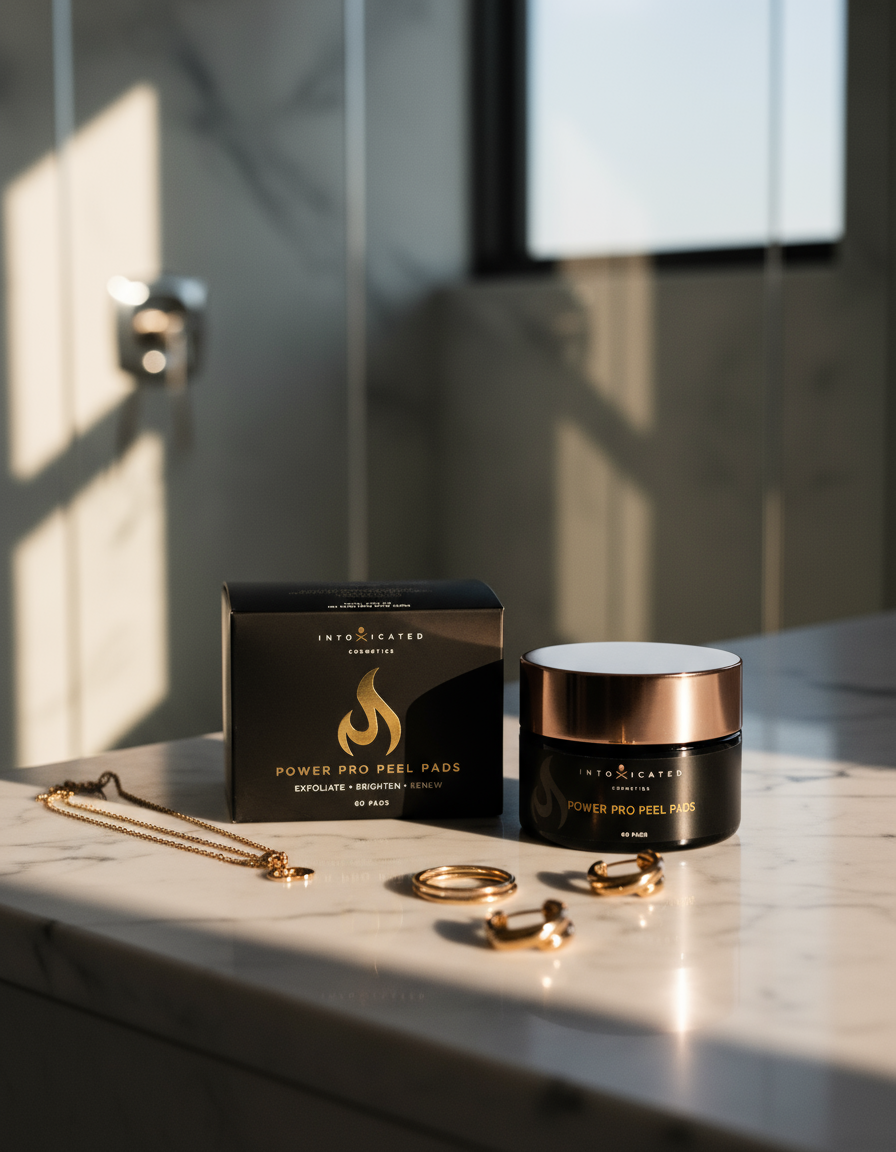
Exfoliation can help keep excess surface buildup from becoming part of the problem. By removing older cells that have accumulated at the surface, the skin can maintain a smoother, clearer foundation as its natural renewal process continues. Our Peel Pads offer three levels of exfoliation, from Power Wash for those beginning with acids to Power Correct and the more advanced Power Pro. The goal is not to exfoliate as aggressively as possible, but to choose a level the skin can tolerate consistently.
When it comes to recovery, stronger does not necessarily mean faster. Skin that is constantly trying to recover from the routine itself has less opportunity to benefit from it.
Then There’s The Renewal Happening Below The Surface
Exfoliation can help manage what accumulates at the surface, but some visible changes require supporting the skin’s deeper renewal processes. Concerns such as uneven tone, rough texture, fine lines, and loss of firmness develop through processes that cannot be corrected through surface exfoliation alone. This is where retinal becomes particularly valuable. Sea Venom Retinal encourages cellular turnover while helping improve the appearance of fine lines, uneven tone, rough texture, and firmness. Its time-released retinaldehyde system was designed to provide advanced renewal while helping minimize the irritation commonly associated with more aggressive retinoid routines. This balance becomes especially important when the goal is to support skin that may already be recovering more slowly.
There can be a tendency to equate irritation with efficacy. If a treatment leaves the skin peeling, tight, or uncomfortable, it can be easy to assume that it must be working harder. In reality, a routine that repeatedly leaves the skin irritated or excessively dry can make consistency difficult and place additional pressure on a complexion that is already slower to recover. Effective renewal is not about forcing the skin through change. It is about consistently supporting the processes that allow that change to happen.
Hydration Is More Important Than It Gets Credit For
Hydration may not sound as exciting as cellular renewal or collagen support, but the skin’s ability to recover depends heavily on the condition of its barrier. When the barrier is functioning efficiently, it helps limit excessive water loss while protecting the skin against outside irritants. When the system becomes compromised, dehydration, tightness, rough texture, and sensitivity can become more noticeable, while the skin may become more reactive to products and environmental changes that previously caused little concern.
Dehydration has a way of making almost everything else look more pronounced. Fine lines can appear deeper, texture becomes more obvious, and skin that is already dealing with inflammation or environmental stress may look even less resilient. Antidote Moisturizer helps provide lasting hydration while reinforcing the skin barrier as the final step of the routine. Rather than treating moisture as an afterthought, maintaining hydration helps create the environment the skin needs to function efficiently while it recovers.
Sometimes supporting better skin is not about adding another treatment. It is about making sure the skin can properly handle the treatments already being used.
Your Skin Is Recovering From Yesterday While Dealing With Today
There is another complication when it comes to recovery. Environmental exposure does not stop simply because the skin is already managing stress from the day before. Every morning introduces another round of ultraviolet exposure, pollution, free radicals, temperature changes, and other environmental factors. Over time, that repeated exposure can contribute to inflammation, collagen breakdown, barrier disruption, and the visible signs associated with premature aging.
This is why recovery and protection are more closely connected than they might seem. Helping the skin manage new stress can reduce the amount of additional damage it will need to recover from later. Dragon Serum was developed to help defend against daily environmental stress while supporting the skin barrier, hydration, and long-term resilience. Its antioxidant-focused formula helps neutralize free radicals and calm visible signs of stress while supporting the complexion against continued environmental exposure.
It is a different way of thinking about recovery. Instead of only asking how to repair what has already happened, an effective routine should also consider how much additional stress the skin will need to manage tomorrow.
The Temptation To Do More Can Make Things Worse
When skin is not behaving the way we want, the instinct is often to escalate the routine. More exfoliation, another serum, a stronger treatment, or an extra cleanse can seem like the fastest route back to clearer, smoother skin. But recovery is not a race, and piling on treatments does not necessarily speed up the process. Over-cleansing and excessive exfoliation can disrupt the skin barrier, while combining too many intensive treatments can create the redness, dryness, and sensitivity you are trying to correct in the first place.
Even cleansing deserves some restraint. Clean Queen Glycolic Cleanser removes oil, impurities, and daily buildup without leaving the complexion feeling stripped, creating a clean foundation for the treatments that follow. From there, the objective should not be to use as many corrective products as possible. It should be to give the skin what it actually needs through appropriate renewal, targeted treatment, hydration, and protection.
There is a difference between supporting enough change to improve the complexion and continuously overwhelming it. A routine can still be effective without leaving the skin feeling as though it has endured something.
Your Skin Hasn’t Stopped Responding. It Just Needs Different Support.
The way skin recovers at 40 will not necessarily look exactly like it did at 20. A blemish may leave evidence behind for longer; dehydration may become more visible, and environmental stress may show up differently across the complexion. Maintaining smooth texture, even tone, and comfortable skin can also require more consistency than it once did. These changes do not mean the skin has lost its ability to improve.
Skin remains highly responsive when given the right environment. Supporting cellular renewal can help move beyond lingering texture and discoloration, while maintaining hydration allows the barrier to function more efficiently. Targeted treatments can help address specific concerns, as antioxidant protection limits some of the daily stress the complexion would otherwise need to recover from later. Together, these steps create a routine designed around supporting the skin rather than repeatedly pushing it beyond what it can comfortably manage.
Perhaps the biggest shift is simply changing the objective. The goal is not to make skin behave exactly as it did years ago, but to understand how its needs have changed and build a routine that works with those changes. Good skincare is not about demanding that your skin recover overnight. It is about consistently giving it the support it needs to remain resilient, responsive, and better equipped to recover from whatever comes next.

Commentaires